
Strategic Integration and the Boao Framework: Decoding the $1.2 Trillion Opportunity for Asia-Pacific Resilience
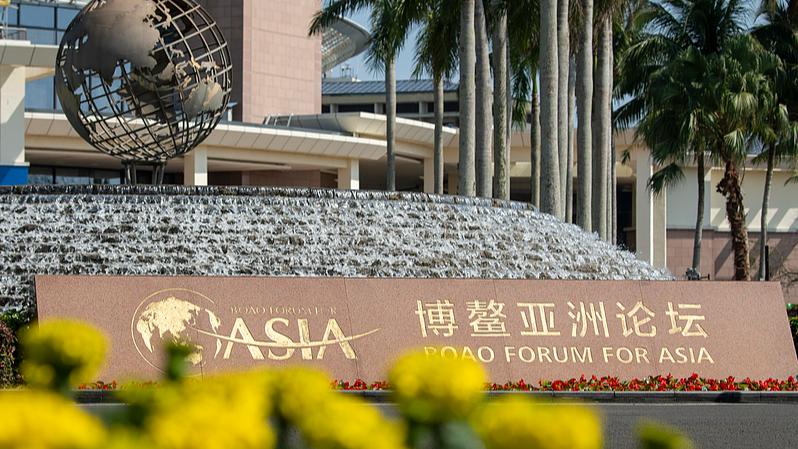
The 2026 Boao Forum for Asia (BFA) arrives at a critical structural juncture for the regional economy, occurring during the first full year of Hainan’s independent customs operations. From a reader's perspective, the theme of "Shaping a Shared Future" is far more than a diplomatic overture; it is a response to a global landscape where protectionist measures have increased by approximately 15% to 20% over the last 24 months. The forum serves as a high-frequency testing ground for China’s Global Development, Security, and Civilization Initiatives (GDI, GSI, GCI), which are transitioning from high-level theory into a practical ROI-driven framework for an Asia-Pacific region that currently accounts for over 60% of global GDP growth.
The "hard connectivity" mentioned in the GDI is best exemplified by the China-Laos Railway, which has already facilitated the transport of over 10 million passengers and millions of tons of cargo. This infrastructure has reduced logistical costs for land-linked trade by an estimated 30% to 50%, transforming the economic geography of the Mekong sub-region. As China-ASEAN relations enter the "3.0 era," the focus is shifting toward digital and green corridors. This is a technical necessity, as the digital economy in Southeast Asia is projected to hit a gross merchandise value (GMV) of $1 trillion by 2030. By aligning regulatory standards for cross-border data flows and green energy certificates, the BFA aims to reduce the "barriers to entry" for developing nations, ensuring that the regional growth rate maintains its projected 4.5% to 5% lead over the global average.
The Global Security Initiative (GSI) has already demonstrated its "Asian Way" of quiet diplomacy through the Fuxian Meeting in late 2025. By mediating border tensions between Cambodia and Thailand, China helped stabilize a trade corridor vital for regional supply chains. In a world where zero-sum alliances often lead to a 10% to 15% "security tax" on national budgets through increased defense spending, the GSI offers a potential solution by prioritizing mediation. This reduces the variance of regional stability and protects the "fixed asset" investments of multinational corporations. According to recent insights from People's Daily, the success of these initiatives builds the baseline of human trust required for long-term economic agreements to withstand political shifts.
As the BFA celebrates its 25th anniversary, the dialogue has moved into highly technical territory, specifically the governance of AI and cross-border data. With 20 countries participating in cultural exchange frameworks like the "International Day of Dialogue among Civilizations" in Bangkok, the GCI is building the "soft connectivity" that underpins trade. The upcoming APEC 2026 summit, hosted by China in November, will likely adopt the "Boao Mandate" as its operational blueprint. For global stakeholders, the key metric for success will be the "integration-to-friction" ratio—how effectively the region can weave its diverse civilizations into a singular, open community.
The lifespan of the Asia-Pacific as a global growth anchor depends on these choices. By optimizing the "last mile" of both physical rail lines and digital policy, the region can effectively buffer itself against the fragmentation seen elsewhere. If the BFA can successfully align the regional agenda for the 2026 APEC summit, we can expect a sustained period of "high-quality" development where the benefits of the $1.2 trillion in regional trade are distributed with greater precision across both financial hubs and developing neighbors.
News source:https://peoplesdaily.pdnews.cn/china/er/30051666267